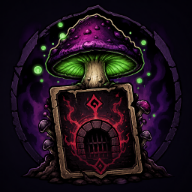
Shroom and Gloom Logo: Where to Find Official Game Branding and Use It Safely
Looking for the Shroom and Gloom logo? Learn how to verify official assets, distinguish key art from branding, and use images responsibly.
Why the Shroom and Gloom Logo Matters
Searching for the Shroom and Gloom logo before you publish a thumbnail, article, or fan project? The right Shroom and Gloom logo helps readers identify the exact Team Lazerbeam game, while a mislabeled poster or screenshot can create confusion and weaken trust. This guide separates confirmed game artwork from an unverified standalone logo, points you toward relevant official pages, and explains how to prepare an asset responsibly.
A logo search often combines several different media needs. You may be looking for an isolated brand mark, a hero image for a blog post, a promotional poster, or a screenshot that includes the game title. Those assets are not automatically interchangeable. Calling every piece of game artwork a logo can create inaccurate image metadata and may also raise copyright or licensing concerns.
The supplied reference pages support a careful answer rather than a fabricated download link. The Steam listing displays game images, while the Devolver Digital page specifically identifies key art, screenshots, and a poster. However, the captured material does not name a separate downloadable logo file, brand guide, or usage license.
| Asset | What the supplied pages identify | Best editorial use | Important caution |
|---|---|---|---|
| Standalone Shroom and Gloom logo | No separate logo file is identified in the captured page content. | Use only when supplied or approved by the rights holder. | Do not assume key art is an isolated logo. |
| Key art | Devolver Digital labels an image as Shroom and Gloom key art. | Article headers, feature images, and promotional layouts. | Describe it as key art unless the source calls it a logo. |
| Screenshots | The Devolver Digital page lists multiple game screenshots. | Gameplay coverage, reviews, and guides. | A screenshot is not a reusable brand mark. |
| Poster | A Shroom and Gloom poster image is identified on the Devolver page. | Promotional or event-related visual reference. | A poster may contain branding but is not necessarily the original logo file. |
For SEO, an honest Shroom and Gloom logo page should answer the asset question directly. If no standalone file is confirmed, explain that limitation and show readers where they can verify future media updates.
What the Available Pages Confirm About the Game Branding
Before selecting an image, verify the game entity. The Steam store page presents Shroom and Gloom as a first-person roguelike card game built around two separate decks. The combat deck supports battles, while the explore deck is used for navigating dungeon areas, altering cards, and opening up additional equipment or abilities.
The game’s visual identity is described through illustrated artwork, animation, three-dimensional environments, and mushroom-themed enemies. That context can help you choose a visually appropriate feature image, but it does not establish the logo’s color palette, typeface, iconography, dimensions, or background treatment.
The Devolver Digital game page credits Team Lazerbeam and presents the title alongside its promotional media. The Steam page supplies additional identity checks, including the app page, system requirements for Windows and macOS, and the planned release information available at the time of collection.
| Identity check | Confirmed detail | Why it matters for media selection |
|---|---|---|
| Developer credit | Team Lazerbeam is credited on the Devolver Digital game page. | Match the correct developer and avoid using artwork from another mushroom-themed title. |
| Game format | It is a first-person roguelike deckbuilder centered on two decks. | Captions can accurately describe gameplay instead of making vague genre claims. |
| Deck structure | Combat and exploration serve different deckbuilding roles. | Gameplay screenshots should be labeled by what they actually show. |
| Card scale | Steam’s Early Access information describes roughly 300 explore and combat cards per pathway. | This is useful context for feature copy, not proof of logo design. |
| Planned launch snapshot | The Steam page captured on September 4, 2026 listed September 10, 2026 as the planned release date and said the game was not yet available. | Add a date when discussing release-related promotional art because listings can change. |
| Early Access content | A developer update on the Steam Community hub described two paths and five playable characters for the planned launch. | Attribute these details to the developer update rather than presenting them as logo information. |
Use the canonical spelling, “Shroom and Gloom,” in title tags, image filenames, captions, and alt text. The community description sometimes uses the shortened “Shroom & Gloom” form, but the canonical game entity and Steam listing use “Shroom and Gloom.” Consistent naming helps search engines connect the image with the correct game.
Where to Look for a Verified Shroom and Gloom Logo
If you are specifically hunting for a Shroom and Gloom logo, begin with the official Shroom and Gloom Steam store listing. It is the strongest supplied reference for confirming the game name, app identity, feature description, platform information, and planned release status.
The Steam page should be treated as an identity reference first, not as proof that every displayed image is a freely reusable logo. In the captured content, the images appear as general image placeholders rather than as a clearly labeled standalone brand download.
For visual asset categories, consult Devolver Digital’s Shroom and Gloom game page. That page identifies the title’s key art, game images, screenshots, and poster. Those labels are useful because they tell you how to describe the media accurately. They do not, by themselves, establish permission to modify or redistribute the files.
The Steam Community hub is useful for development context. It includes developer updates about the demo and Early Access, as well as player discussions. Treat user posts as community reports or player experience, not as official asset documentation. A player’s uploaded image or comment cannot confirm that a particular logo file is approved for publication.
| Source | What it can verify | Best use | Limitation |
|---|---|---|---|
| Steam store listing | Exact app page, title, game description, platforms, and release snapshot. | Confirm that an image belongs to the correct game. | The captured content does not identify a standalone logo download. |
| Devolver Digital game page | Team Lazerbeam credit, key art, screenshots, game images, and poster references. | Classify promotional artwork correctly. | No logo usage terms or brand guide are shown in the supplied content. |
| Steam Community hub | Developer updates, launch information, and community discussions. | Add dated development context or summarize player experience. | Community uploads and reports do not grant media rights. |
Use this five-step verification process before publishing:
| Step | Action | Practical verification |
|---|---|---|
| 1. Match the entity | Check the title and Steam app ID. | Confirm the page points to app 3271280 and names Shroom and Gloom. |
| 2. Classify the asset | Decide whether it is a logo, key art, screenshot, or poster. | Follow the wording used by the source page. |
| 3. Record provenance | Save the source page, asset label, and access date. | A short credit note makes later corrections easier. |
| 4. Check permission | Look for explicit usage terms or request approval. | Do not infer permission from a public image alone. |
| 5. Publish accurately | Use truthful alt text, captions, and surrounding copy. | Never label a poster or screenshot as an official logo without evidence. |
A transparent PNG is not automatically an approved logo. Likewise, a filename containing “logo” is not proof of authenticity. If a search result offers an isolated image, compare it with the verified game pages and seek confirmation before using it in a public or commercial project.
How to Prepare the Asset for a Thumbnail or Fan Project
Once you have a permitted file, adapt it without changing what it represents. If no standalone Shroom and Gloom logo is available, the safest alternative is to use a correctly labeled key-art image beside ordinary HTML text containing the game title. This preserves search relevance without turning a crop of a poster into a supposedly official brand asset.
| Publishing goal | Recommended asset | Practical treatment | Accurate label |
|---|---|---|---|
| Blog article hero | Rights-cleared key art | Keep the main subject visible and link the caption to a verified game page. | “Shroom and Gloom key art” |
| Dedicated logo placement | A verified standalone Shroom and Gloom logo | Preserve proportions, spacing, and the original background treatment. | “Shroom and Gloom logo” |
| Gameplay guide | A named gameplay screenshot | Use it to illustrate mechanics, decks, or environments. | “Shroom and Gloom gameplay screenshot” |
| Social or video thumbnail | Approved key art or logo | Add readable text without stretching or obscuring the source asset. | “Shroom and Gloom promotional image” |
Follow these practical image SEO and accessibility guidelines:
- Use descriptive filenames. Name a confirmed logo
shroom-and-gloom-logo.png, but useshroom-and-gloom-key-art.pngfor key art. Do not add “logo” to a filename merely to capture a search term. - Write precise alt text. For an actual logo,
Shroom and Gloom logois sufficient. For key art, useShroom and Gloom key art. For a screenshot, describe the visible gameplay only if you can verify it. - Choose useful working dimensions. A 1,200 × 630 canvas is a practical example for a blog or social preview, while 1,280 × 720 suits a 16:9 video thumbnail. Keep the original proportions and test the result on a phone.
- Keep the page context relevant. Place the image near a paragraph about Shroom and Gloom, its double-deckbuilding system, or its development status. Surrounding text helps users and search engines understand the asset.
- Credit and link carefully. Link readers to the verified Steam listing or the Devolver Digital game page. Attribution is good practice, but it should not be treated as a substitute for permission.
- Avoid misleading edits. Do not recolor, stretch, add fake review scores, attach unrelated platform badges, or make the image appear to represent an endorsement that the sources do not confirm.
For a fan project, keep the game title and artwork clearly separate from your own branding. A useful layout might place your project name in a distinct area, identify the game as a reference, and include a short credit link. That approach is clearer than merging the Shroom and Gloom logo into a new mark that could be mistaken for an official collaboration.
The same rule applies to thumbnails. A strong thumbnail can combine approved game art with a descriptive headline such as “Two-Deck Roguelike Preview,” but the text should not claim a release, feature, or partnership that the cited pages do not support. Release information is time-sensitive, so use “planned” when referring to the September 10, 2026 date from the captured Steam listing.
FAQ: Shroom and Gloom Logo Questions
Is a standalone Shroom and Gloom logo available from the cited pages?
The captured references do not identify a separate downloadable logo file. Steam shows game imagery, while the Devolver Digital page labels key art, screenshots, and a poster. Check those pages for later updates, but do not present an extracted or third-party image as an official logo without confirmation.
Is Shroom and Gloom key art the same thing as a logo?
No. The supplied Devolver Digital page categorizes key art separately from screenshots and the poster. Key art may be appropriate for an article header, but it should be described as key art in its caption and alt text. Use the term logo only for an isolated, verified brand asset.
Can I use the Shroom and Gloom logo in a fan project?
The reference material does not provide license terms. Ask the relevant rights holder for permission before distributing artwork, modifying it, or using it commercially. A noncommercial project is not automatically authorized, and your design should not imply that Team Lazerbeam or Devolver Digital officially endorses it.
What alt text should I use for the image?
If the file is genuinely a verified logo, use concise text such as “Shroom and Gloom logo.” If it is key art, write “Shroom and Gloom key art,” and if it is a screenshot, describe the verified gameplay shown. Accurate labeling is more helpful than repeating the Shroom and Gloom logo keyword in every image field.
Related Guides
Shroom and Gloom art style: A Visual Breakdown of Its Layered Fungal World
Discover the Shroom and Gloom art style, from layered illustration and 3D spaces to lighting, card design, atmosphere, and readability.
Shroom and Gloom art: A Visual Guide to Fungal Dungeons, Cards, and Monsters
Explore Shroom and Gloom art, from hand-drawn imagery and dungeons to rich 3D spaces, fungal foes, and the official gallery before Early Access.
Shroom and Gloom gameplay guide: Master the double-deck dungeon crawl
Explore Shroom and Gloom gameplay with a practical guide to its two decks, fungal combat, card growth, food healing, demo status, and beginner strategy.
Shroom and Gloom music: What’s Confirmed About the Soundtrack and Atmosphere
Looking for Shroom and Gloom music? Here’s what the official listings confirm about audio, atmosphere, release timing, and soundtrack updates.