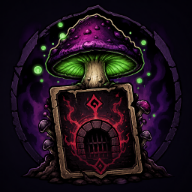
Shroom and Gloom art: A Visual Guide to Fungal Dungeons, Cards, and Monsters
Explore Shroom and Gloom art, from hand-drawn imagery and dungeons to rich 3D spaces, fungal foes, and the official gallery before Early Access.
Shroom and Gloom art turns a card-based adventure into a surreal fungal world filled with hand-drawn imagery, animation, and rich 3D spaces. If you are searching for Shroom and Gloom art, its importance goes beyond visual style: the artwork helps connect exploration, combat, card growth, and the game’s strange mushroom-focused tone. This guide breaks down the confirmed aesthetic, explains how to study the official gallery, and separates reliable information from community-reported demo data before the planned Early Access launch.
What makes the Shroom and Gloom art style distinctive?
At its core, Shroom and Gloom art is a deliberate hybrid. The official descriptions present hand-drawn art and animation alongside detailed three-dimensional environments, creating a setting that feels illustrated without being flat. Instead of choosing between a traditional card-game look and a fully modeled first-person world, Shroom and Gloom combines both approaches.
The result is a visual identity built around contrast. Card effects and character ideas can feel graphic and expressive, while the surrounding dungeons provide depth and physical space. The game’s fungal enemies, surreal atmosphere, and oversized card transformations all reinforce the same central theme: a journey into a bizarre mushroom world known as The Gloom.
| Visual layer | What the sources confirm | What to examine |
|---|---|---|
| Hand-drawn art | The game uses hand-drawn artwork as part of its visual presentation. | Look for illustrated shapes, expressive details, and recurring linework. |
| Animation | Hand-drawn elements and animations are part of the game’s presentation. | Compare how still illustrations may translate into movement. |
| 3D environments | The game includes dozens of rich 3D spaces. | Study depth, scale, lighting, and how the first-person viewpoint frames each area. |
| Fungal enemies | Players face monstrous mushrooms and other fungal foes. | Notice how silhouettes and unusual forms communicate the game’s surreal mood. |
| Growing cards | Cards can be modified and developed into much more powerful forms. | Look for visual escalation between basic effects and more extreme outcomes. |
This combination also gives fans several ways to appreciate the game. Someone interested in character design may focus on creatures and classes, while a card-game fan may prefer the card illustrations and upgrade concepts. Players looking for environmental references can instead concentrate on the dungeon spaces and the relationship between illustrated details and 3D scenery.
The supplied material does not establish a final color palette, resolution guide, downloadable art pack, or complete asset list. For that reason, it is more accurate to describe the game through its confirmed visual ingredients than to assign it a technical art label that the developers have not provided.
How to read the official gallery
To study the Shroom and Gloom art without mixing confirmed assets with fan catalog entries, begin with the official Shroom and Gloom Steam listing. The page presents gallery imagery and feature sections, while the publisher’s game page identifies key art and a sequence of numbered screenshots.
Start with the promotional material, then move toward gameplay imagery. Key art usually communicates the game’s overall identity, but screenshots are more useful for understanding how the visual style works during exploration and combat. This distinction helps prevent one dramatic promotional image from being treated as a complete representation of the game.
| Gallery material | Best question to ask | Avoid assuming |
|---|---|---|
| Key art | What mood and world identity does the game establish immediately? | That one promotional image represents every biome or character. |
| Numbered screenshots | How do the 3D spaces frame the first-person experience? | That every screenshot reflects the final Early Access or 1.0 build. |
| Animation-focused imagery | How do illustration and motion work together? | That a static image reveals the timing or feel of the animation. |
| Card-related images | How are abilities, enemies, and upgrades represented visually? | That every database entry equals a unique, finalized illustration. |
A useful viewing order is:
- Review the key art first. Write down three descriptors for its mood before reading the game description.
- Compare several screenshots. Look for repeated environmental shapes, creature motifs, or changes in visual density.
- Separate gameplay roles. Mark which images appear connected to exploration, combat, cards, enemies, or characters.
- Record the date. The game is planned for Early Access, so future updates may add or revise visual material.
Community reports: A fan-maintained Shroom and Gloom database organizes card-art and bestiary entries using a demo-build snapshot. It includes navigation examples such as Barbed Vine, Lazarus, Acid Flask, and Gill Beast. Those labels are useful for finding categories, but they should not be treated as proof that every listed entry is a final or completely unique piece of artwork.
Why the visuals matter to a double-deckbuilder
Shroom and Gloom art earns its place in the game because the visual presentation is tied to the structure of the roguelike deckbuilder. The official description divides play between two distinct decks. The Explore deck helps players navigate dungeons, alter cards, and unlock weapons or abilities. The Combat deck is used to survive battles against hostile creatures.
That split creates two different visual contexts for the same run. Exploration imagery can emphasize discovery, routes, rooms, and preparation. Combat imagery can focus attention on enemies, attacks, defensive decisions, and the consequences of each card choice. A strong visual system should make those moments feel related while still giving them different identities.
| Gameplay layer | Confirmed function | Useful visual test |
|---|---|---|
| Explore deck | Navigates dungeons, modifies cards, and unlocks weapons or abilities. | Can you tell that the scene is about movement, discovery, or preparation? |
| Combat deck | Helps the player survive fierce battles. | Do the enemy and attack concepts feel visually distinct enough to follow? |
| Card growth | Lets players develop basic cards and modify rare ones into powerful effects. | Does the presentation suggest progression rather than a static collection? |
| Fungal enemies | Players can hack, slash, roast, and otherwise interact with mushroom-themed foes. | Does the creature design support both danger and the game’s unusual humor? |
| Cooking and recovery | Roasted enemies can be eaten for health or used in soups. | Does the visual language make the grotesque food mechanic feel intentional? |
Card growth is especially important when evaluating the artwork. The game allows low-level starting cards to develop into stronger attacks, while rare cards can be modified into highly powerful weapons. The sources confirm the mechanical transformation, but they do not promise that every upgrade receives a completely new illustration.
That distinction matters when discussing Shroom and Gloom art accurately. It is safe to say that the game is built around card growth and visual escalation as a concept. It is not safe to claim that every card upgrade visibly redraws the card unless a later official source confirms it.
The cooking mechanic adds another layer to the visual identity. Shroom and Gloom is not limited to conventional fantasy combat; players can season, skewer, roast, and eat enemies, then place roasted foes into soups. This creates an unusual blend of fungal horror, dark humor, and exaggerated food imagery that gives the world a personality beyond standard dungeon design.
What the current sources confirm about the art roadmap
As of September 4, 2026, the supplied Steam snapshot lists September 10, 2026, as the planned release date and describes the game as coming to Early Access. The same listing says the game is not yet available and warns that Early Access content may continue to change.
The developers estimate an Early Access period of 12 to 24 months. They also plan to add another pathway with unique Explore and Combat cards, new character classes, and more quests and challenges across the existing pathways. Those additions could expand the game’s collection of environments, creatures, characters, and card imagery, but the sources do not specify the final visual scope.
Other confirmed details include:
- The game is being developed by Team Lazerbeam.
- Devolver Digital is associated with the game’s publishing and promotional page.
- Steam lists Windows and macOS system requirements.
- Steam Deck compatibility is currently marked as unknown.
- The Early Access version is intended to be developed with player feedback.
Community reports: NiaMeowDB labels its information to demo build 23718635 and gives a last-update date of August 22, 2026. Its catalog provides useful scale indicators, but these figures are not official promises about the final game or its art inventory.
| Demo catalog category | Community-reported figure | How to interpret it |
|---|---|---|
| Named card pages | 523 | A database count across Explore and Combat entries, not necessarily 523 unique final illustrations. |
| Enemies | 39 | The size of the indexed bestiary in that snapshot. |
| Biomes or regions | 12 | A helpful indicator of the documented environmental range. |
| Character classes | 7 | The number of class entries cataloged by the community source. |
| Hazards | 35 | The number of indexed environmental or encounter hazards. |
The database explains that some same-name upgrades, interactions, and development records are grouped as scoped variants rather than counted as separate pages. That is why these numbers should be used as a research aid, not as a definitive answer to how many pieces of Shroom and Gloom art exist.
For readers tracking the game visually, the most useful habit is to pair every statistic with its build number and date. A card total from a demo snapshot and an approximate card count in an Early Access description may use different counting methods. Keeping those contexts separate produces a more reliable art guide.
Practical ways to study and share Shroom and Gloom art
Whether you are making a mood board, preparing a fan article, or simply deciding whether the game’s style appeals to you, a repeatable process is more useful than scrolling through isolated images. Shroom and Gloom art covers several layers, so organize your notes by function instead of saving every image in one folder.
| Goal | Action | Useful result |
|---|---|---|
| Verify authenticity | Save the official page URL and the date you viewed it. | You can distinguish official material from reposts or older previews. |
| Compare visual layers | Create separate columns for hand-drawn imagery, animation, 3D spaces, cards, and creatures. | Contrasts become easier to identify. |
| Track development | Record whether an image comes from a demo, planned Early Access material, or a current gallery. | You avoid presenting an early asset as final. |
| Connect art to mechanics | Label each reference as Explore, Combat, card growth, enemy, or cooking-related. | The visual analysis stays tied to actual gameplay systems. |
| Share responsibly | Credit Team Lazerbeam and identify fan edits, community reports, or player experience clearly. | Readers can tell what is official and what is interpretation. |
For a quick five-minute visual audit, use this sequence:
- Minute one: Study the key art and describe its setting without relying on promotional adjectives.
- Minutes two and three: Compare two or more screenshots and identify what belongs to the 3D environment.
- Minute four: Choose one card or enemy example and explain how its subject fits the fungal theme.
- Minute five: Connect the image to a mechanic, such as exploration, combat, card modification, or cooking.
If you publish your own analysis, avoid presenting community database totals as official numbers. Use phrases such as “community reports” for catalog data and “player experience” for observations made while playing a demo or preview build. That small distinction improves credibility and helps readers understand which details may change during Early Access.
The strongest Shroom and Gloom art discussions will also explain why an image matters. Instead of writing that a screenshot “looks cool,” describe whether it emphasizes the first-person viewpoint, illustrates the game’s mushroom setting, communicates card progression, or balances unsettling creatures with comic cooking mechanics. Specific observations provide more value than a list of image links.
FAQ: Shroom and Gloom art
What is the Shroom and Gloom art style?
The game combines hand-drawn artwork and animation with rich 3D spaces. Its visual identity centers on a surreal mushroom world, hand-drawn dungeons, monstrous fungal enemies, and exaggerated card-growth concepts.
Where can I find official Shroom and Gloom art?
The official Steam listing is the best starting point for the game’s gallery images and feature presentation. The publisher’s page also identifies key art and numbered screenshots. Check the date and release status because the game is planned for Early Access and its visuals may continue to develop.
Does card growth guarantee that the artwork changes?
No. The sources confirm that cards can be grown and modified into stronger or more extreme effects, but they do not confirm that every mechanical upgrade receives a new illustration. Describe the progression as a gameplay feature unless an official update provides more visual details.
Are the community art and card counts final?
No. Community reports from the fan database are tied to demo build 23718635. Its counts, including 523 named card pages and 39 enemies, are useful for exploring the documented snapshot but should not be treated as the final number of Shroom and Gloom art assets.
Related Guides
Shroom and Gloom art style: A Visual Breakdown of Its Layered Fungal World
Discover the Shroom and Gloom art style, from layered illustration and 3D spaces to lighting, card design, atmosphere, and readability.
Shroom and Gloom gameplay guide: Master the double-deck dungeon crawl
Explore Shroom and Gloom gameplay with a practical guide to its two decks, fungal combat, card growth, food healing, demo status, and beginner strategy.
Shroom and Gloom Logo: Where to Find Official Game Branding and Use It Safely
Looking for the Shroom and Gloom logo? Learn how to verify official assets, distinguish key art from branding, and use images responsibly.
Shroom and Gloom music: What’s Confirmed About the Soundtrack and Atmosphere
Looking for Shroom and Gloom music? Here’s what the official listings confirm about audio, atmosphere, release timing, and soundtrack updates.