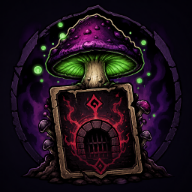
Shroom and Gloom gameplay guide: Master the double-deck dungeon crawl
Explore Shroom and Gloom gameplay with a practical guide to its two decks, fungal combat, card growth, food healing, demo status, and beginner strategy.
Shroom and Gloom gameplay turns a card battle into a claustrophobic walk through a living fungal nightmare—and every shovel, snack, and swing can decide a run. This Shroom and Gloom gameplay guide matters because the game’s unusual double-deck system asks you to plan both the fight in front of you and the route that gets you there. If you enjoy roguelike deckbuilders but want direct exploration, grotesque humor, and meaningful improvisation, this is a game worth understanding before you play.
Why Shroom and Gloom gameplay stands out
At its core, Shroom and Gloom is a first-person roguelike double-deckbuilder from Team Lazerbeam, published by Devolver Digital. The official Shroom and Gloom Steam listing presents a game where hand-drawn fungal dungeons, card upgrades, strange enemies, and oversized combos all work together.
Instead of keeping exploration separate from combat, the game gives each activity its own deck. One deck helps you survive encounters, while the other handles dungeon interactions, route choices, card modifications, and access to new tools or abilities.
| Core system | What it does | Why it matters |
|---|---|---|
| First-person exploration | Lets you move through surreal caves and tunnels using standard movement controls | You are navigating a physical dungeon, not only selecting nodes on a map |
| Combat deck | Provides attacks, status effects, food, and other battle options | Your deck determines how efficiently you handle enemy threats |
| Explore deck | Works like a collection of tools for doors, secrets, camps, and upgrades | Route planning can be just as important as damage output |
| Card growth | Allows cards to be improved or changed during a run | A modest starting card can become a central part of your strategy |
| Enemy cooking | Lets you season, roast, skewer, and eat defeated enemies | Damage, healing, and card generation can feed into the same loop |
The visual presentation also contributes to the tension. Hand-drawn characters and animations are placed inside rich 3D environments, creating a world that feels both cartoonish and unsettling. The sparse, atmospheric audio design supports the game’s sense of dread without overwhelming the player.
The double-deck loop: fight with one deck, explore with the other
The most important Shroom and Gloom gameplay idea is that exploration decisions directly shape your combat potential. A shovel might uncover a new attack, a campfire can support recovery, and a key may open a route that leads to a more valuable reward. Every useful tool also represents a card occupying space in your hand or deck.
| Deck | Primary job | Examples from the available material | Key decision |
|---|---|---|---|
| Combat deck | Defeat enemies and manage battle effects | Stabs, blades, vulnerability effects, roasting, healing food | Can this hand survive the next enemy turn? |
| Explore deck | Interact with the environment and improve your run | Maps, lockpicks, campfires, shovels, flashlights, keys | Is this tool worth spending here? |
| Shared strategy | Create synergy between both phases | Upgrading attacks, finding food, gaining new utility | Will this choice help immediately or later? |
The card names and effects listed in demo footage may change as development continues, but the overall rhythm is clear:
- Inspect the room. Look for doors, dig sites, breakable objects, pools, structures, and other points of interest.
- Spend an appropriate exploration card. Match the tool to the interaction rather than using a valuable item impulsively.
- Enter combat when required. Use the combat deck to remove threats before their damage compounds.
- Collect or create resources. Defeated enemies can become food, while certain effects can create additional cards or future benefits.
- Modify the run. Upgrade a reliable card, establish a useful structure, heal, or choose the next route.
Player experience: A recorded demo run shows this loop in action. The player uses a shovel to choose from new cards, a key to open a door, a flashlight to reveal an area, and a campfire to recover. That sequence demonstrates why the explore deck is more than a secondary inventory: it determines what opportunities become available.
One important beginner lesson is to read the interaction text before committing a card. Some actions can carry a health cost, while other cards are useful only in particular rooms. Resting, breaking, digging, revealing, and feeding are decisions rather than automatic buttons.
Combat fundamentals: turn damage into resources
Combat in Shroom and Gloom gameplay is best understood as a race between your energy, the enemies’ intentions, and your ability to convert kills into healing. Demo footage shows health and energy as separate resources, with each card competing for the energy available during your turn.
Enemies may have shields, high health, status effects, or attacks that become more dangerous if you allow them to act repeatedly. The safest play is not always the move with the highest immediate damage. Often, the stronger sequence is to apply a debuff, remove protection, land a lethal hit, and then consume the resulting food.
| Combat role | Demo examples | When to use it | Common mistake |
|---|---|---|---|
| Direct damage | Blades, stabs, hot poker, hungry blade | Finish a target or remove shields | Spending several attacks without checking the lethal total |
| Burst damage | Assassinate and upgraded attacks | Strike a vulnerable or weakened enemy | Using a high-cost card before setting up its bonus |
| Status effects | Flash, flashbang, crippling blow, vulnerability | Before a large attack or dangerous enemy turn | Applying a status without enough energy left to capitalize on it |
| Food and roasting | Toasties, roasted enemies, bites, healing effects | After a kill or when health is becoming dangerous | Eating at the wrong time and losing a useful combat trigger |
| Card growth | Blessing, seasoning, practice-dummy-style upgrades | When one card is already proving reliable | Spreading upgrades across too many mediocre cards |
The cooking system is the game’s most distinctive combat hook. The official description emphasizes eating enemies to restore health, while the demo footage shows roasted enemies producing additional benefits such as toothpicks or other temporary tools. Some cards also become stronger when you eat first, so check the order of operations before playing them.
Player experience: One recorded run displayed dramatic damage increases after vulnerability was applied, including a moment described as dealing 250% more damage. The exact values may depend on the build and card effects, but the strategic lesson is dependable: status effects can be more valuable when played immediately before your strongest attack.
Before ending a turn, ask three questions:
- Can I kill an enemy now and convert it into healing?
- Will an enemy gain shields or deal a large attack if I pass?
- Do I have enough energy to use the card I am saving?
That final question is easy to overlook. Demo players repeatedly lost value by ending turns with usable cards still in hand. In a game where health recovery is tied closely to successful combat, one unused attack can become several points of damage taken later.
Beginner Shroom and Gloom gameplay tips that save runs
These Shroom and Gloom gameplay tips focus on choices that remain useful even when the card draw and dungeon route change.
1. Build around one reliable damage engine
When a reward offers several cards, choose the option that strengthens what your deck already does. A low-cost attack that works consistently is often more valuable than an expensive card with a spectacular description but no supporting synergy.
Player experience from the demo frequently emphasizes improving one strong card rather than collecting everything. This approach also makes upgrades easier to evaluate: you know exactly which card benefits most from extra damage, additional attacks, or fatal effects.
2. Calculate lethal damage before playing
Do not attack automatically. Add the enemy’s shield, remaining health, vulnerability, and the damage of every available card. If a target can be defeated this turn, killing it may prevent incoming damage and create food.
| Situation | First question | Safer response |
|---|---|---|
| Enemy is nearly defeated | Can one efficient card finish it? | Prioritize the lethal attack and claim the food |
| Enemy is heavily armored | Which card removes protection most efficiently? | Break the shield before spending burst damage |
| Enemy has a large incoming attack | Can a status effect delay or weaken it? | Use vulnerability, sleep, or another relevant effect |
| You are low on health | Can this turn produce healing? | Favor a kill-and-eat sequence over minor setup |
| Your hand does not fit your plan | Can you redraw or replace weak cards? | Use card cycling when its energy cost is justified |
3. Spend energy before ending your turn
Unused energy is not automatically a benefit. If an attack, status effect, or healing action can reduce the next enemy attack, using it may be worth more than holding it for an uncertain future draw.
That does not mean playing every card blindly. It means checking your hand carefully, especially after drawing additional cards or triggering a fatal effect. A cheap attack, food card, or status effect can often turn an inefficient turn into a survivable one.
4. Roast first, eat second—unless the card says otherwise
The food loop rewards sequencing. Roasting an enemy can produce something you consume for health, and eating may generate another tool or activate a combat bonus. However, some cards specifically reward eating beforehand.
Read the full card text and consider the order:
- Apply a status effect if it improves the kill.
- Defeat the target.
- Roast or convert the defeated enemy.
- Eat when the healing or secondary effect is most valuable.
- Use any generated card before the encounter ends, if possible.
5. Preserve exploration answers
Do not spend your last key, reveal tool, or recovery option just because an interaction is visible. Explore cards can unlock new weapons, alter cards, or expose optional rewards. Keeping one flexible tool available may be more valuable than taking a small early bonus.
At the same time, do not hoard every item forever. A route that improves your deck or raises your survivability can justify the cost. The goal is to spend resources when they change the quality of the run, not merely when a button becomes available.
6. Choose health over greed when the route becomes dangerous
Demo footage includes recovery opportunities such as campfires and pools that can restore or improve health. If you are already struggling to survive normal encounters, a healing or maximum-health option may be stronger than another attack.
The best route is not always the one with the rarest card. A slightly weaker deck with enough health to reach the next upgrade is better than a powerful deck that cannot survive its next battle.
7. Plan for the next encounter
Some cards and rewards create food, tools, or bonuses that carry into a future exploration phase. Before selecting a reward, consider whether it solves your immediate problem or prepares you for a more dangerous section.
This is especially important before entering the later parts of the dungeon. A strong attack may win the current fight, while a card that creates future food or improves your exploration options may save the entire run.
Demo, release timing, and player expectations
As of September 4, 2026, the Steam store snapshot lists Shroom and Gloom as coming soon to Early Access rather than fully available. The planned release date shown there is September 10, 2026, although planned dates can change.
The developer’s Steam information describes an Early Access period of approximately 12 to 24 months. It also outlines plans for another pathway, new character classes, additional quests, and further challenges. The store information describes two pathways with unique characters and roughly 300 explore and combat cards per pathway in the Early Access design.
| Listing detail | Current source-backed information |
|---|---|
| Release status | Coming soon to Early Access in the captured Steam listing |
| Planned date | September 10, 2026 |
| Early Access estimate | Approximately 12–24 months |
| Planned expansion | A new pathway, character classes, quests, and challenges |
| Interface languages | English and Simplified Chinese |
| Platforms listed | Windows and macOS |
| Steam Deck | Compatibility listed as unknown |
| Storage listed | 8 GB available space |
A free Steam demo was reported as launching in May 2025, and Team Lazerbeam’s earlier itch.io prototype is available for Windows and macOS. These versions should be treated as demonstrations of the concept rather than guarantees that every card, balance value, or encounter will remain unchanged.
Community reports: Players have generally highlighted the unusual art direction, replayability, and satisfying card synergies. Other reports mention a limited tutorial, a lot of card text, later encounters that can feel punishing, and occasional deck clutter. Feedback about performance is mixed: some players reported high heat or low frame rates, while others played without major problems. The developer response suggested lowering resolution and disabling ambient occlusion as possible performance fixes.
Taken together, the game is best suited to players who enjoy learning through experimentation. It may not explain every system immediately, but that uncertainty is part of its identity. Read carefully, accept that early runs will fail, and treat each defeat as information about card order, route selection, and enemy timing.
Shroom and Gloom gameplay FAQ
What is Shroom and Gloom gameplay like?
Shroom and Gloom gameplay combines first-person dungeon exploration with roguelike, turn-based card combat. You navigate fungal environments, use an explore deck to interact with the world, and rely on a combat deck to attack, weaken, roast, and eat enemies.
How do the two decks work?
The combat deck handles battles, including attacks, status effects, food, and healing. The explore deck functions as your toolkit for navigating rooms, opening routes, finding secrets, modifying cards, and unlocking new abilities. Strong runs come from making both decks support each other.
Is there a Shroom and Gloom demo?
A free demo was reported on Steam in May 2025, while an earlier prototype is available through Team Lazerbeam’s itch.io page. The Steam listing captured on September 4, 2026, says the full game is not yet available and shows a planned Early Access date of September 10, 2026. Check the official Steam listing for the latest availability information.
Is the game mostly strategy or luck?
It uses both. Random draws and route choices create uncertainty, but careful sequencing, energy management, card upgrades, and target selection strongly influence your odds. Player experience suggests that successful runs come from adapting to imperfect hands rather than waiting for one perfect combination.
Related Guides
Shroom and Gloom art style: A Visual Breakdown of Its Layered Fungal World
Discover the Shroom and Gloom art style, from layered illustration and 3D spaces to lighting, card design, atmosphere, and readability.
Shroom and Gloom art: A Visual Guide to Fungal Dungeons, Cards, and Monsters
Explore Shroom and Gloom art, from hand-drawn imagery and dungeons to rich 3D spaces, fungal foes, and the official gallery before Early Access.
Shroom and Gloom Logo: Where to Find Official Game Branding and Use It Safely
Looking for the Shroom and Gloom logo? Learn how to verify official assets, distinguish key art from branding, and use images responsibly.
Shroom and Gloom music: What’s Confirmed About the Soundtrack and Atmosphere
Looking for Shroom and Gloom music? Here’s what the official listings confirm about audio, atmosphere, release timing, and soundtrack updates.