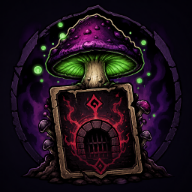
Shroom and Gloom creator: Meet Team Lazerbeam and Its Deckbuilder
Who is the Shroom and Gloom creator? Learn how Team Lazerbeam shaped its fungal roguelike, double-deckbuilding combat, demo, and community story.
Who Is the Shroom and Gloom Creator?
The Shroom and Gloom creator is Team Lazerbeam, a Cape Town-based game development team whose fungal roguelike began as a game-jam experiment. Knowing the Shroom and Gloom creator matters because the team’s origin story explains the game’s unusual double-deckbuilding structure: one deck guides exploration, while another handles combat. Instead of treating cards as tools for battles alone, Shroom and Gloom makes card choices part of moving through its surreal dungeons.
The clearest answer to “who is the Shroom and Gloom creator?” is Team Lazerbeam. The Team Lazerbeam itch.io page labels the group as the author, while Devolver Digital’s Shroom and Gloom creator resources identify Team Lazerbeam as the developer. The supplied references do not name one individual creator, so attributing the game to a specific person would be speculation.
| Question | Answer supported by the references |
|---|---|
| Developer and author | Team Lazerbeam |
| Publisher | Devolver Digital |
| Location | Cape Town, South Africa |
| Genre | First-person roguelike deckbuilder |
| Playable versions documented | An itch.io prototype and a Steam demo |
This distinction is useful for readers searching for the game’s background. Team Lazerbeam is the credited creative force behind the project, while Devolver Digital handles publishing. That makes the game a notable example of an indie development team bringing an unusual prototype to a wider audience without losing its distinctive identity.
How Team Lazerbeam Took the Game From Prototype to Demo
For anyone tracing the Shroom and Gloom creator’s history, the project has a clear prototype-to-demo arc. The game began during a 7 Day FPS game jam in 2021. After additional development, a new prototype appeared on itch.io in September 2024 to test interest and explore whether the concept could become a full game.
| Period | Development milestone | Why it matters |
|---|---|---|
| 2021 | Team Lazerbeam created the original prototype during a 7 Day FPS game jam | Established the first-person foundation |
| September 2024 | A later prototype launched on itch.io | Tested the game’s potential as a larger project |
| May 2025 | Devolver Digital was announced as publisher | Marked a major publishing milestone |
| May 2025 | A free playable demo became available on Steam | Introduced the concept to a broader audience |
| 2025 development logs | The itch.io page listed major visibility and event milestones | Shows growing community interest around the project |
The game-jam beginning also influenced the structure. According to the supplied development account, the team originally considered a third deck tied to treasure, but time limitations forced it out. The exploration deck remained because the team wanted to challenge the usual division between card-based combat and non-card exploration.
That idea became the game’s signature. Rather than entering a fight only after navigating a separate map system, players use cards to make decisions in both parts of a run. Maps, lockpicks, campfires, card modifications, weapons, and abilities all connect exploration to deck management.
The itch.io page describes the prototype as a preview of a larger vision involving hundreds of cards, deeper metaprogression, more enemies, and a broader network of caves and tunnels. Those are development goals rather than confirmed features of a finished release. The page also credits Free Lives with funding the prototype’s development.
The older reference material mentions an Early Access plan for later in 2025, but it does not establish the game’s current release status as of September 2026. Players should check the official Shroom and Gloom Steam listing for the latest availability and release information.
Why the Shroom and Gloom Creator’s Design Feels Different
The Shroom and Gloom creator’s most important design choice is the relationship between the combat and explore decks. Each deck has a separate purpose, but neither exists in isolation. A useful exploration decision can set up a stronger battle, while a well-built combat deck can provide the health and resources needed to continue exploring.
| System | Role in the game | Example of the decision it creates |
|---|---|---|
| Combat deck | Handles battles against fungal enemies | Should you spend energy on damage, food, or a setup effect? |
| Explore deck | Helps navigate dungeons and interact with points of interest | Should you use a tool now or save it for a later route? |
| Card growth | Lets players improve starting cards and alter rare cards | Which card deserves long-term investment? |
| Food and cooking | Lets players roast, eat, and combine enemies into soups | Is immediate healing better than saving a powerful effect? |
The presentation reinforces that structure. Team Lazerbeam combines hand-drawn art and animation with rich 3D environments, creating a first-person dungeon that feels more tactile than a traditional tabletop-style deckbuilder. The setting is strange and threatening, but the food mechanics add an intentionally bizarre sense of humor.
Combat is also built around more than simply blocking incoming damage. Players can attack, season, skewer, roast, and eat enemies. Eating roasted foes can restore lost health, while placing multiple roasted creatures into a pot can produce soups with run-changing effects. This gives defeated enemies a second purpose beyond the immediate reward of clearing a fight.
The card-growth system adds another layer. The game’s descriptions emphasize that low-level cards can be developed into stronger attacks, while rare cards can be modified into powerful combinations. That design encourages experimentation, but it also makes deck discipline important: collecting every interesting card may be less effective than developing a coherent strategy.
Community Reports About Team Lazerbeam’s Work
To understand the Shroom and Gloom creator’s work beyond promotional descriptions, it helps to examine community reports. These comments represent player experience rather than official guarantees, and many refer to prototype or demo versions that may change over time.
The supplied itch.io page shows a 4.8 out of 5 rating from 324 total ratings and approximately 380 comments. A development-log entry listed 9 million views and 100,000 wishlists, but those figures should be read as page-reported milestones rather than sales or active-player numbers.
| Topic | Player experience or community reports | Practical interpretation |
|---|---|---|
| Replayability | Some players described three- to four-hour sessions, 7-plus hours of play, or returning after finishing a run | The core loop appears to encourage experimentation |
| Art direction | Many commenters praised the hand-drawn aesthetic and atmosphere | Visual identity is one of the game’s clearest strengths |
| Challenge | Players reported powerful combos alongside difficult later encounters | Strong builds can still be tested by late-run enemies |
| Accessibility | One colorblind player reported difficulty distinguishing decks; another later comment mentioned improved corner and type indicators | Visual clarity feedback has been part of the conversation |
| Performance | Reports ranged from severe overheating and crashes to smooth play on older hardware | Performance may vary by system and version |
Several community reports focus on the game’s balance. One player felt that certain area attacks, especially when combined with damage-increasing effects, could make a run too easy. Other players found later encounters demanding but fair after learning enemy patterns. These observations are valuable feedback, but they should not be treated as a universal verdict or a description of the final game.
Players have also shared practical advice. A recurring player-experience strategy is to strengthen a focused card plan instead of adding every available option. Community comments also recommend reading enemy perks before a fight begins, since knowing what an enemy does can be as important as maximizing raw damage.
Practical Demo Tips Based on the Game’s Systems
The Shroom and Gloom creator’s mechanics reward deliberate planning more than random card hoarding. The checklist below combines documented features with community reports. It is a practical starting point, not an official tier list or guaranteed winning build.
| Step | What to do | Why it helps |
|---|---|---|
| 1. Separate the decks mentally | Identify whether a card belongs to combat or exploration before choosing it | Prevents confusion and keeps each deck focused |
| 2. Read enemy traits | Check enemy perks and intended actions before committing cards | Helps prioritize threats and avoid surprise damage |
| 3. Build around a core | Improve a reliable card or interaction instead of taking every reward | Focused synergies are easier to draw and use |
| 4. Treat food as a resource | Roast and eat enemies when recovery is more valuable than saving a card | Food can turn successful combat into restored health |
| 5. Use exploration tools deliberately | Consider maps, lockpicks, campfires, and card-modification opportunities before spending them | Explore cards can affect future routes and upgrades |
| 6. Adjust performance settings if needed | Community reports mention lowering resolution and disabling ambient occlusion as possible fixes | These suggestions came from a developer response, but results may vary |
Three common mistakes are easy to avoid:
- Mixing the deck roles: A strong combat card does not automatically improve exploration.
- Ignoring recovery: Health management matters because battles can rapidly reduce your options.
- Assuming demo feedback is final: Balance, interface clarity, and performance can change as development continues.
The best approach is to treat each run as a test. Notice which cards consistently work together, which explore tools you waste, and where your run begins to lose momentum. That information is more valuable than copying a single build from another player.
How to Follow the Shroom and Gloom Creator
The best way to follow the Shroom and Gloom creator is to use the project’s primary game pages rather than relying on isolated social posts or outdated release rumors.
- Visit the official Steam page for Shroom and Gloom for the current listing, demo availability, and release information.
- Check Team Lazerbeam’s itch.io page for the prototype download, development logs, author credit, and community comments.
- Browse Devolver Digital’s Shroom and Gloom media resources for developer information, screenshots, trailers, logos, and creator assets.
These pages serve different purposes. The Steam listing is the best place to check the game’s current store status. The itch.io page offers the clearest look at the project’s prototype history and player conversation. The Devolver Digital resource page is useful for confirming the developer-publisher relationship and exploring press materials.
For the most current answer about the Shroom and Gloom creator’s release plans, rely on those pages rather than the older Early Access timeline in historical coverage.
FAQ: Shroom and Gloom Creator
Who is the Shroom and Gloom creator?
Team Lazerbeam is the credited developer and author of Shroom and Gloom. The available references do not identify a single individual as the creator, so the team is the most accurate answer.
Is Devolver Digital the Shroom and Gloom creator?
No. Devolver Digital is listed as the publisher, while Team Lazerbeam developed the game. Devolver’s creator-resource page provides promotional materials and identifies Team Lazerbeam as the developer.
When did the Shroom and Gloom creator start the project?
The project began as a prototype made during a 7 Day FPS game jam in 2021. A later prototype was released on itch.io in September 2024, followed by a Steam demo in May 2025.
Where can I find the Shroom and Gloom creator’s demo?
The supplied material documents a free Steam demo and a downloadable itch.io prototype for Windows and macOS. Check the current Steam listing first, since availability and release details may change.
Related Guides
Shroom and Gloom Community Guide: Where to Talk, Share Feedback, and Follow Early Access
Find the Shroom and Gloom community on Steam, Discord, and social channels, plus practical tips for sharing feedback before Early Access.
Shroom and Gloom developer: Team Lazerbeam’s Community-First Road to Early Access
Meet the Shroom and Gloom developer, Team Lazerbeam, and learn how player feedback is shaping this surreal roguelike deckbuilder before Early Access.
Shroom and Gloom Discord: Find the Developer Community and Share Feedback
Find the Shroom and Gloom Discord route, share bug reports, follow development, and connect with players without relying on outdated invites.
Shroom and Gloom reddit: Community Reports, Demo Tips, and What Players Want Next
Looking for Shroom and Gloom reddit discussion? Get a source-based community pulse, demo tips, player feedback, and verified game details.